Remote job untethers individuals from conventional offices, however it additionally removes the safety net of an on-site initial aider, a stocked medical closet, and a quick rescue response. Whether you're in a hill town with spotty cell solution or a seaside apartment where the proprietor's first aid set is a roll of tape and a paracetamol blister, the calculus adjustments. You come to be the first -responder. The distinction between panic and deliberate activity typically boils down to what you exercised last month, not what you believe you keep in mind from years ago.
I have actually taken and taught first aid training on 4 continents. The typical string is never ever the brand name of bandage or the logo on the mannequin, it's behaviors. People who practice the basics manage the unpleasant edges of real life better. Digital wanderers have different danger profiles and accessibility restrictions than white-collar worker in downtown workplaces. That requires a customized method: select the right first aid course, construct a sensible kit you can bring, and preserve skills with shorter, smarter refresher courses. This guide walks through just how to do that with judgment and a dose of healthy skepticism.
The threat photo for location-independent work
A workdesk in Bali or Oaxaca modifications your exposure in subtle means. You're not climbing Everest, yet you may be riding a mobility scooter on unfamiliar roads, consuming road food, functioning long hours in cramped settings, and swimming in browse more powerful than it looks. The emergencies you're more than likely to deal with fall under patterns that any great first aid and CPR course can prepare you for, but a few should have special attention.
Foodborne illness strikes tourists greater than homebodies. Dehydration from vomiting and diarrhea can transform quickly, particularly in warm environments. Recognizing when oral rehydration suffices and when to intensify avoids avoidable health center stays. Mobility scooter spills create roadway rash, small fractures, and head injuries, commonly without prompt access to imaging. Strong bleeding control abilities and audio decision-making about when to move someone issue much more when emergency situation services are slow. Allergic reactions, consisting of anaphylaxis to shellfish or unknown active ingredients, can rise within mins, and local pharmacies do not always supply epinephrine reliably.
Then there's the slow-burn danger that remote employees typically ignore: repetitive strain disorder and posture-related neck or back pain. A first aid course will not deal with functional designs, however it will certainly teach you to identify warnings for something extra severe, like unexpected neurological symptoms. Ultimately, the ocean and hills are magnets. Also a "informal" walking can place you an hour from aid. Altitude sickness, warmth ailment, and jellyfish stings are not exotic once you start accumulating passport stamps.
None of this argues for fear. It says for capability. The best training turns what-ifs into actions.
What makes a first aid course fit for remote work
Most first aid courses teach the same core: analyze the scene, phone call for assistance, start CPR, use an AED, control bleeding, handle shock, and take care of usual injuries. For remote employees and digital wanderers, I try to find 6 attributes when picking among first aid courses.
Accreditation and acknowledgment come first. A qualified first aid certificate, usually valid for one to 3 years depending upon jurisdiction, makes certain the material straightens with current standards. Red Cross, St John, American Heart Association, and certified independent service providers are winners. If you intend to offer at occasions or gain access to particular coworking rooms that need a certification, ask which bodies they recognize.

Second, scenario-based method should be more than a buzzword. Digital web content alone will certainly not wire your hands to discover the appropriate intercostal area for compressions or to use a stress plaster properly. An excellent cpr course puts you on the floor with a manikin for at the very least two cycles of CPR, with real-time feedback. Better courses let you exercise control of extreme bleeding with tourniquets and hemostatic dressings, and toss you curveballs like a choking youngster or a passing out coworker.
Third, try to find adaptable styles that collaborate with traveling. Hybrid first aid and CPR courses, where theory is on-line and hands-on is compressed into a half-day block, are suitable if you're passing through a city. Some suppliers timetable evening or weekend break skills sessions in coworking rooms. I have actually seen pop-up courses in hostels that were remarkably good. Ask candidly about manikin-to-student proportions and whether they consist of AED technique. If all you see are slides and no method, keep walking.
Fourth, content that talks with low-resource settings. This is where first aid pro instructors stand apart. I desire them to address what to do if you have no AED, inadequate cell reception, or no formal rescue service. As an example, how much time do you dedicate to hands-only CPR prior to exhaustion in a two-person scenario, and just how do you rotate? Exactly how do you improvise a splint with trekking poles and a headscarf? If the curriculum pretends every emergency situation finishes with a paramedic strolling in at minute six, it is not tailored to you.
Fifth, traveling wellness attachments. A common program probably mentions dehydration and warm. A stronger one gives you practical dehydration analysis (urine shade is inadequate), dental rehydration ratios, the essentials of elevation ailment, and what to do with aquatic stings you actually come across in Southeast Asia or Australia. They must additionally teach epinephrine auto-injector use since seafood allergies can appear for the first time in adulthood.
Finally, revitalize courses. Abilities degeneration is brutal. If your last cpr training was greater than a year earlier, your compression price and deepness are likely off. Suppliers that offer a short cpr correspondence course, also a 90-minute abilities consult comments, help you stay sharp without losing a weekend.
The non-negotiables: CPR, AEDs, and bleeding control
When people ask me what to focus on, I tell them 3: CPR, AED usage, and hemorrhage control. Whatever else you can frequently improvisate or postpone. These 3 decide life or death in minutes.
High-quality CPR is a mechanical ability with straightforward regulations and high failure rates among the unpracticed. You require to hit 100 to 120 compressions per minute at a deepness of about 5 to 6 centimeters for adults, enable full upper body recoil, and decrease stops briefly. That checks out straightforward and really feels hard when adrenaline rises. Educating with feedback manikins that reveal rate and depth takes the uncertainty out. If you leave a program uncertain whether your compressions fulfill the standard, you did not get what you paid for.
AED competence is similarly crucial. In flight terminals or modern-day coworking areas, AEDs exist, however fear keeps individuals from opening them. Every excellent first aid and CPR course will let you power one on and comply with voice triggers on an instructor system. Understanding just how to bare the chest, location pads properly, and clear prior to shock is not complicated, but technique seals it right into muscle mass memory. Ask your coworking room where the AED is and, much more significantly, whether it's preserved. I as soon as found one with a dead battery in a glossy new center in Lisbon.
Bleeding control matters because scooters, knives, glass tables, and browse fins exist. Tourniquets conserve lives, and no, they are not just for battlegrounds. You need to practice using a commercial tourniquet on yourself and on a companion, high and tight. Time to application matters greater than brand discussions. Hemostatic gauze and pressure dressings belong in your set if you fit utilizing them. Courses that shy away from hands-on blood loss circumstances leave a gap.
Choosing between typical and wilderness-leaning courses
Not every remote worker needs a complete wild initial -responder credential. That is a week or even more of training designed for guides who operate hours from conclusive care. For a lot of digital nomads, a common first aid and CPR course with a couple of wilderness-flavored components hits the mark: patient analysis when evacuation is postponed, improvisated splints, environmental emergencies, and decision factors for when to evacuate.
In cities with combined offerings, ask service providers whether they run "remote or ascetic" modules. Some programs badge these as remote first aid courses, frequently two days long, that expand on core skills. I have actually found these especially useful for people that split time in between cities and weekend break hikes. They instruct you to think in time rather than range. If you can not get a rescue in under 20 mins, you're in a remote context. Your top priority list modifications: hemorrhaging control, airway monitoring, and maintaining the person cozy climb the listing, while full immobilization usually takes a rear seats to risk-free, mild movement.
What your first aid kit should appear like when you endure of a backpack
Kits bloat conveniently. The most effective one is the set you carry. For digital wanderers, I recommend a two-tier method: a pocket set that goes all over, and a tiny traveling set in your daypack or mobility scooter storage space. The firstaidpro.com.au pocket kit covers the initial three mins. The traveling set covers the very first hour.
Here is a small, useful loadout that has actually offered me on the road:
- Pocket package: two sets of nitrile gloves, CPR face guard, a little triangular bandage or cravat, 2 alcohol wipes, a couple of adhesive tapes, and a compress dressing. Travel kit: a business tourniquet, hemostatic gauze plus a pressure dressing, a roll of natural cover, a couple of clean and sterile gauze pads, sticky tape, sore plasters, a small container of hand sanitizer, tweezers, a digital thermometer, dental rehydration salts, loperamide and ondansetron if you tolerate them, acetaminophen and advil, an antihistamine, and any type of individual meds. If you or a close traveling partner has a serious allergy, pack two epinephrine auto-injectors.
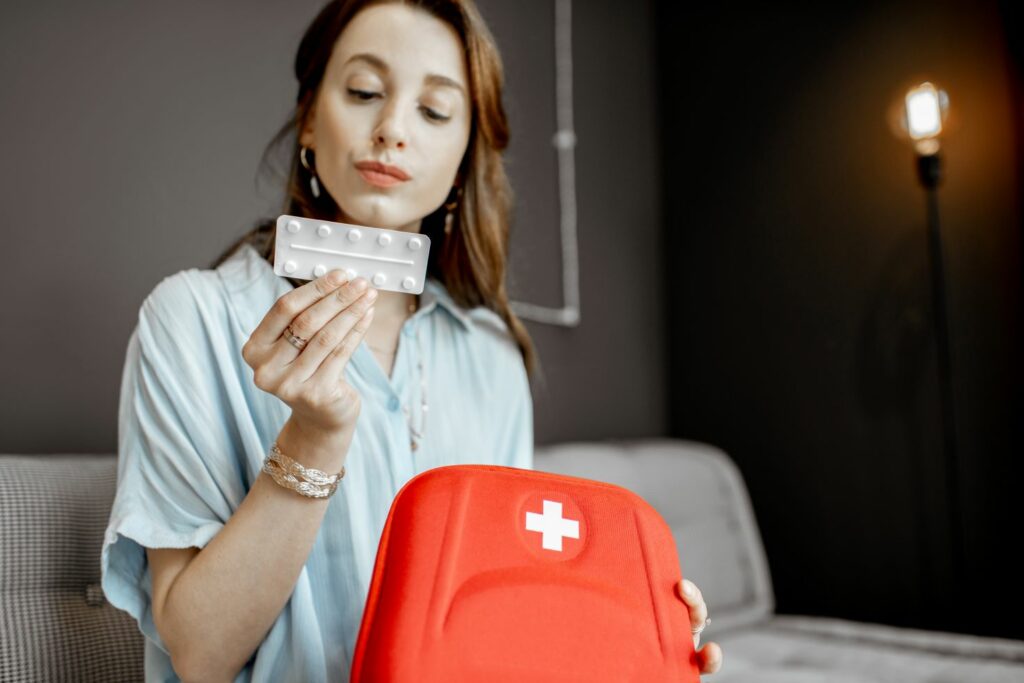
Everything must stay in a red or high-contrast pouch you can discover blind at the bottom of a bag. Replace products you make use of before you neglect. If you fly often, maintain a note with any things that will obtain flagged at safety. Tourniquets and scissors often invite inquiries. I maintain blunt-tip clinical shears in inspected baggage to stay clear of the discussion. If you rent out mobility scooters, include a lightweight hi-vis strip or little headlamp to your set. Evening scenes are disorder; being seen is a safety and security intervention.
The truths of getting aid abroad
The emergency number and response top quality differ widely. In Europe, 112 jobs. Partially of Asia and Latin America, cops, fire, and clinical may have various numbers and different standards. I keep a tiny card in my wallet with regional emergency numbers, the closest urgent care or hospital, and the neighborhood poison control if offered. Coworking supervisors often recognize which personal healthcare facilities see immigrants without drama.
Response times can extend. I have waited 40 mins for an ambulance in a modern-day city after a mass-casualty accident bewildered services. Build a mental version for the first 10 mins without aid. Scene safety, phone call for assistance, send somebody to meet the rescue if roadways are confusing, appoint spectators tasks. Delegation relaxes chaos.
Language adds friction. Discover and practice a brief manuscript in the neighborhood language: place, nature of emergency situation, variety of people injured, and whether a person is subconscious or not breathing. Even 20 words aid. When traveling with other remote employees, agree on functions ahead of time at meetups or resorts. I run five-minute "what would you do" drills with teams before offsite events. Individuals roll their eyes before and thank me after.
Certification logistics for people that move
A first aid certificate expires, generally in twelve to thirty-six months relying on the carrier and degree. If you transform countries, the proof can get unpleasant. Choose a service provider with global acknowledgment or at least online confirmation. Some coworking chains accept any accredited first aid and cpr courses; others define a handful of names. If the course you took in Sydney needs converting for a client in Germany, make sure the releasing body Mandurah first aid provides a certification in English or a typical multilingual format.
Hybrid renewals are your buddy. Lots of companies use a cpr correspondence course that focuses on compressions, AED use, and choking, with optional add-ons for bleeding and shock. Arrange these near work traveling. I block a half-day on a Friday in cities where I recognize service providers run night sessions. If you pass through cities known for strong first aid pro areas, like Melbourne, Vancouver, or Dublin, you can often locate drop-in refreshers.
Keep a digital folder with scans of your first aid certificate, training course syllabus, and any kind of letters of presence. Conserve them offline. Locations and customers in some cases ask for proof at uncomfortable times, like the first day of a resort in a rural vacation home with weak Wi-Fi.
When remote actually indicates remote: field-tested judgment
A coastline community with a clinic is something. A trek three hours from a sealed road is an additional. If you press right into true remote travel even occasionally, spend the added time on decision-making skills.
Transport decisions are the hardest phone calls I see. Moving an individual with a feasible spine injury is laden. In the real world, you evaluate risks. If the scene is dangerous or help is not coming, you may require to move them gently to a much safer location. A wilderness-leaning module will certainly instruct you exactly how to do a modified drag, pad gaps if you have to move somebody onto a firm surface, and display for neurological adjustments. I do not go for perfection in the area. I aim for less harm.
Heat disease is common and underappreciated. Warm stroke eliminates, and the repair is hostile cooling while dealing with ABCs. Cooling down first, transport 2nd, if you can reduce core temperature on site. Ice water immersion is best, yet not constantly feasible. Ice bag in underarms and groin, color, fanning with a t-shirt, and wet towels assist. I instruct teams to stop dealing with warm exhaustion like a minor aggravation in tropical co-living spaces.
Water-related injuries call for particular practices. Do not think a person who coughed after a near-drowning is fine. Observe for at least an hour for breathing problems. For believed spinal injuries in shallow-water browse mishaps, resist need to pull somebody upright. Support the head in the water, keep the individual horizontal when possible, and coordinate with others to raise as one. If you haven't exercised this in a swimming pool, take a program that runs a water-rescue module.
How to evaluate course top quality prior to you book
Marketing language appears the exact same from numerous carriers. Penetrate under the surface.
Ask the amount of mins of hands-on CPR each participant obtains and whether feedback devices are used. Anything much less than a few full cycles is thin. Confirm manikin-to-student ratio. Two pupils per manikin is excellent, four is acceptable, eight is poor. Verify that AED instructors are consisted of, not just spoken explanations. Look for specific reference of bleeding control with tourniquets, not only bandaging.
Instructors with field experience teach differently. A first aid pro that has actually functioned occasions, lifeguarded, or assisted in the field will certainly sprinkle the course with judgment calls that make the product stick. Check out evaluations for discusses of practical circumstances and equipment you can actually buy, not just brand sponsorships.
Finally, inspect the aftercare. Great service providers send out a succinct electronic handbook, web links to short refresher videos, and choices for a fast skills check in six to twelve months. If they market a course and disappear, anticipate your skills to fade faster.
The duty of easy avoidance in a mobile lifestyle
Prevention may not be attractive, however it maintains you out of problem. I have actually seen a lot more journeys wrecked by avoidable dehydration and insolence on mobility scooters than by freak accidents. Pick safety helmets that satisfy identified requirements and healthy effectively. If a rental store supplies helmets that resemble playthings, search for a better one. Construct micro-habits: consume alcohol a liter of water before leaving for a co-work day, bring a small electrolyte package when you recognize you'll sweat, and consume something salty after swims in hot climates.
Ergonomics issue in Airbnbs. I take a trip with a lightweight laptop stand and a roll-up outside keyboard. It looks fussy till you prevent the migraine you constantly obtain after a week stooped over a coffee table. Stretch breaks minimize the grouchy ligaments that send individuals hunting for painkillers.
For food safety and security, adhere to the citizens. Active stalls with high turnover defeated dazzling empty restaurants for safety. If you are hit with gastro, switch quickly from rejection to monitoring. Oral rehydration is your close friend. Mix your own if required: roughly 6 degree teaspoons of sugar and half a degree tsp of salt in a liter of risk-free water, drank steadily. That recipe has saved even more tourists than any kind of unique supplement.
A straightforward method loophole to maintain skills usable
Book your first aid and cpr course. After that develop a ten-minute monthly technique loophole so the understanding does not collect dust.
- Two mins: see a short CPR refresher course video from your course service provider and shadow the hand placement and rate. Two minutes: open your AED app or picture of the regional AED place at your coworking area and picture getting it. If you move spaces, ask on day one. Three mins: draw your kit, check expiration dates, and method using your tourniquet one-handed and two-handed. Time yourself. Two minutes: run a mental practice session of a scenario you're most likely to face in your existing location, such as a scooter collision on a hectic street or a jellyfish sting on a jampacked beach. One minute: update your emergency situation card with the local center and the neighborhood emergency number.
I've enjoyed this small routine maintain people tranquil when it counted. Method is not simply for professionals.
Costs, timing, and what to expect
Prices differ. In major cities, a combined first aid and cpr course generally runs the matching of 80 to 200 USD, relying on company and nation. Remote or wilderness attachments include another 100 to 300 USD and a day or two of time. A small cpr course or cpr refresher course prices less, commonly 40 to 100 USD for a short session. Covert expenses consist of transport to uncomfortable locations, pause job, and, occasionally, booking costs for last-minute slots.
Expect a half-day to complete day for basic first aid courses, with on-line prework if it's crossbreed. Anticipate to sweat a bit if the trainer is excellent. You'll kneel on tough floors, roll a partner right into healing placements, and tape a fake injury while the clock runs. This pain is not a bug. You don't learn calm by remaining comfortable.
Certification arrives as an electronic first aid certificate within a few days. Shop it where you maintain your key images and inoculation records. Some service providers concern physical cards for an extra charge. I rarely discover those beneficial, but some locations still like them.
Remote job teams and retreats: construct a safety and security layer
If you organize retreats or pop-up co-living, you're holding obligation of treatment. Place a minimum of 2 qualified first aiders in every group of twenty. Outfit venues with a noticeable, stocked kit and an AED if practical. Coordinate with neighborhood clinics in advance, not during the first incident. Run a five-minute safety and security brief, not as a buzzkill, however as a norm-setting moment: where the first aid set is, who has first aid training, exactly how to call for help, and exactly how to go down a pin with general practitioner collaborates. I have actually watched this reduce paralysis when somebody fainted on day two at altitude.
Codify simple policies. No mobility scooter riding without headgears. Swim with a friend in browse. Hydration and sun block readily available in any way times. If this seems firstaidpro.com.au parental, keep in mind that grown grownups make sketchier options in brand-new places, especially with peer pressure. A calmness, clear standard minimizes the probabilities you'll be practicing CPR in flip-flops.
Final idea: proficiency takes a trip with you
You can't load a rescue, however you can load competence. A credible first aid course, reinforced by short, normal technique, transforms you into a person who can act under stress in unfamiliar areas. It is not concerning being a hero. It is about acquiring time, making wise calls, and giving your pals or complete strangers a far better opportunity. For remote workers and electronic nomads, those skills are not optional bonus like a far better electronic camera or a lighter bag. They become part of the set that allows you go farther without tricking on your own about the risks.
Book the training course. Practice the fundamentals. Develop the pocket kit. Maintain your cpr training fresh. When the moment comes, you will certainly do one of the most vital thing a vacationer can do in a situation: advance, and start.
